
Subscribe now and choose from over 30 free gifts worth up to £49 - Plus get £25 to spend in our shop
If my normal driving is changing gear at about 75% before red lining on the rev counter, is this considered normal / sporty / hard driving of a car?
What about depressing the clutch when strating the engine? this was recomended in the manual.
I've noticed other people drive differently and I've recently got a newish car and become mildly concerned about these things.
I take it the car is warmed up when you take it up to 75%?
To be honest, I warm my car up gently and then drive it. Most of the time it is normal driving, but if I am in a place where I can drive it hard then I will as most of the cars I have owned like to be pushed hard once in a while.
Hang on a minute, you said it is "newish", so how many miles has it done?
I have always bought cars with over 40k on the clock. My approach to driving them would be different if the car had significantly less miles on the clock.
that's not ragging by my definition but prob not most economical. Are you at full or part throttle when accelerating up to 75% revs ?
(and wot he said about warming up)
I always depress the clutch to start - a bit less for the starter to turn over
Hammering it off from the lights at 6000 revs and slipping the clutch to get a good start.
Changing gear like your life depends on you going from 3rd to 4th in less than 1/10th of a second.
Accelerating and braking so hard that your engine oil gets above 120 degrees and your brakes start smoking.
Hammering it from stone cold.
Shouting "Watch this" to the passenger.
Left foot braking & handbrake turns on your daily commute.
What's normal really depends on the car - an S2000 feels like a Nissan Micra 1.0 up to something daft like 7000rpm and then all hell breaks loose. On the other hand, some older VW engines are tuned to be torquey, and redline at 6000 revs or so. Revving them beyond 4000 revs or so feels fairly pointless, as the sweet spot for quick driving is between 3 and 4000 rpm.
The thing is, most cars are designed in the last 30 years will stand being hammered flat out. As an example, we took our ancient Golf to France a while ago - we covered thousands of miles, and the car spent hours sat at 4000rpm in 40 degree heat. It didn't even use any oil. Unless you're really willfully abusing things, you're not going to break the powertrain.
The major exceptions to this are things like Ford Kas, which come with 1950s rubbish under the bonnet, and will be pretty hammered by 60-70k.
This
[img]  [/img]
and this
[img]  [/img]
and this
[img] 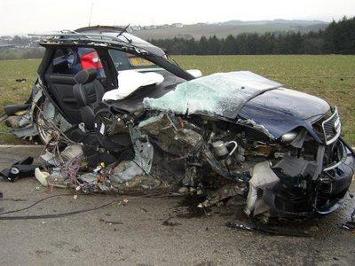 [/img]
Anything less is less than ragging.
The car has done 20k and I'm going from a turbo diesel to a petrol. On paper the performance is the same, but I'm having to re-learn the power delivery, that is it has a constant power delivery rather than a big dump
😆 @ tron!
Great post 🙂
yep trons post pretty much somes up ragging a car and my driving style! 😆
theres no point paying out all the money it costs to run a car these days unless you really are going to have some real fun driving it.
I understood that depressing the clutch to start an engine put extra stress on the crankshaft thrust bearings and the clutch release bearing.
75% toward the red line sounds like fairly high revs, if you've floored it then this is hard acceleration.
depressing the clutch to start reduces the rotating mass driven by the starter motor so the car should start quicker that's all. It might reduce wear on the starter motor perhaps but I doubt it makes a difference to that.
I'll just ask the wife.
Quite frankly, she stress-tests everything we buy to about 300% of its perceived operational limit. She could wheel-spin a milk float at 100mph I reckon...
Re pressing the clutch before starting - my car won't start unless the clutch is pressed.
Ragging - make sure the engine has warmed up (mine has a 7000 rpm limter until it is - normal limit is 8200ish), and let the car cool down after before switching it off.
And doing it properly on public roads in a really fast car is a bit dumb. That's why lower powered cars can be more fun.
About to say the same as beej - I have to press clutch in too. I was also taught to do that some 27 years ago by my driving instructor.
Shouting "Watch this" to the passenger
🙂
I always push the clutch pedal down.It can help on the colder days with older cars that rely on that little extra to get it up and running.Before i got a new starter (around 180k) i most deffo had to do this to get the car started.
"Changing gear like your life depends on you going from 3rd to 4th in less than 1/10th of a second"
OK OK i have to admit that this is why i was late for work last week.3rd to 4th was a bit too ham fisted and i lost a gear linkage rod.
And doing it properly on public roads in a really fast car is a bit dumb. That's why lower powered cars can be more fun.
Only if you like the sound of driving fast rather than actually driving fast, and using a car outside it's designed use. Faster cars are generally better stopping cars, better cornering cars and safer to drive at the same speed as you'd be going if "ragging" a slow car.
I never press the clutch while starting, if my car can't start without the clutch pressed it's got issues that need sorting, and if I've not checked it's out of gear and have left the handbrake off and drive into the person/car in front I shouldn't be driving.
I use my cars, so no hitting the rev limiter isn't unheard of on the petrol, most days for a bit of spirit where safe and clear I'll reach 5K at a bar of boost (7.5K limit). But on my D I rarely take it over 2000rpm, it gets wheezy around 3K (despite redlining up at 5K IIRC) so it becomes pointless other than drowning others in black soot.
I like to live around 2-3K on the petrol as lift off cuts fuel there and the turbo spools there, below 1750 the fuel cut doesn't come in on decel so I waste a lot of fuel and I have to wait for the turbo to spool to get some power.
Only if you like the sound of driving fast rather than actually driving fast, and using a car outside it's designed use. Faster cars are generally better stopping cars, better cornering cars and safer to drive at the same speed as you'd be going if "ragging" a slow car.
Entirely agree - but there are some cars where the speeds you are doing when ragging them are just plain stupid in most circumstances. I did a car control course in mine at Bruntingthorpe and there's no way I'd drive like that on public roads. I'd be changing my tyres every day for a start.
Better brakes and handling are definitely two of the good things about high performance cars.
I never press the clutch while starting, if my car can't start without the clutch pressed it's got issues that need sorting, and if I've not checked it's out of gear and have left the handbrake off and drive into the person/car in front I shouldn't be driving
What have you possibly got to lose by pushing the clutch pedal in? Your argument fails on several points: firstly, you can't be sure it's out of gear even if you've wiggled the gear lever; and secondly, the handbrake will not hold a car that's being turned on the starter.
It seems a pretty petty reason to not do something that might possibly save someone's life - in fact, newer cars that start, literally, "on the button" will not start unless the brake or clutch pedal is firmly pressed.
Finally, mechanical sympathy is an excellent excuse to push it down. The high torque of modern cars requires that expensive and delicate dual-mass flywheels be fitted to minimise shocks to the drivetrain. These tend to have a destructive resonance that occurs at about cranking speed, and it's there that nearly all the wear is assumed to happen.
With replacement costs nearly a grand, it seems prudent to disconnect the flywheel from the loads of the transmission, even in neutral.
What have you possibly got to lose by pushing the clutch pedal in? Your argument fails on several points: firstly, you can't be sure it's out of gear even if you've wiggled the gear lever; and secondly, the handbrake will not hold a car that's being turned on the starter.
What reason would I have for pressing the clutch? I can be sure within the bounds of sense that it's out of gear (unless a naughty monkey came and disconnected my shift cables, leaving it in gear and I'm so stupid as to not notice the lever feel is different). My handbrake holds both of my cars on their starters - you need to fix your brakes.
I don't see how it would save anyones life considering neither car would start (brakes hold car and lock engine) but even if it didn't the engine won't fully start up if started in gear without handbrake (my diesel tries but stutters and falls over), car would get about half a metre.
Mechanical sympathy is not really a consideration in either of my two older cars, good old fashioned solid flywheels and no spark until oil pressure is up. Yet more reasons not to switch to a newer car eh!
[i]What reason would I have for pressing the clutch?[/i]
To select a gear?
Unless you just like starting the engine and just listening to it. 🙂
Next you'll be saying you don't bother pressing the handbrake button before putting on 😀
, it gets wheezy around 3K (despite redlining up at 5K IIRC) so it becomes pointless other than drowning others in black soot
You want to have a look at your fuel map then 🙂
Unless you just like starting the engine and just listening to it.
It has been known in the coffeeking house 😀
Next you'll be saying you don't bother pressing the handbrake button before putting on
Shudder, people who don't should be quietly shipped off to small dark rooms and gassed.
You want to have a look at your fuel map then
Too right. Don't have the tuning hardware for the D, only the petrol lol (and i've just run out of injector flow on that!). Saves me in insurance at least! I did consider upping the boost until the smoke went away, but decided that probably was a bad idea for several reasons!
And that up there is why I no longer drive.
I did consider upping the boost until the smoke went away, but decided that probably was a bad idea for several reasons!
Fit an EGT probe, and as long as it stays below a reasonable value you'll be reet.
The car has done 20k and I'm going from a turbo diesel to a petrol. On paper the performance is the same, but I'm having to re-learn the power delivery, that is it has a constant power delivery rather than a big dump
"Having to re-learn the power delivery ..." Are you serious? How many cars have you driven? It's a POP to get in a car and figure out how to handle the delivery. Petrols are fairly linear (well, the NA ones are anyway), whereas turbo'd diesels are similar to turbo'd petrols but with more torque, i.e. they generally pick up more quickly throughout the range.
And that up there is why I no longer drive.
Smoking Turbo D's aren't great but that seems an excessive response...
Well my normal 'making progress' driving has warped three sets of Brembo GT brake discs.....
NA petrols seem less linear to me - more torque the higher up you go.. going by torque curves VAG turbo petrols seem to be the flattest...
Spacemonkey - in order to make similar progress in the petrol seems to require going much higher up through the rev range before changing gear, I was concerned I may be giving the car a hard time.
When a Porsche driver comes up to you in the petrol station and asks what size of engine you've put inside your Punto... Definitely a sign of ragging... 🙄
If it's a hire car...nothing
To answer the OP - the more relaxed your drive, the longer your car will last as long as it's not really babied.
Perhaps adjust your driving style? I'd probably change gear at between 3-3.5krpm in a typical petrol.. from what I can remember anyway 🙂
Well my normal 'making progress' driving has warped three sets of Brembo GT brake discs.....
Generally "warping" isn't warping at all (if you think about it a warped disc wouldn't cause pulsing, it would just shove the two pads too and fro.
From the motorsport links I have, 90% of "warped" brakes come from people braking hard then either stopping for a long period or sitting at junctions with their foot on the brakes - rarely actually occurs in race conditions as you rarely sit still. Pad material gets diffused into the metal creating a localised hard spot which then wears less. As this goes on you get a fatter spot on the discs and it starts to pulse, this only ever gets worse requiring a new disc. This is why autos get it more than manuals too - as people rarely take them out of drive and rely on the brakes to hold them still at lights.
So stop sitting with your foot on the brakes at junctions after driving fast 🙂
[i]I understood that depressing the clutch to start an engine put extra stress on the crankshaft thrust bearings and the clutch release bearing[/i]
[i]Finally, mechanical sympathy is an excellent excuse to push it down. The high torque of modern cars requires that expensive and delicate dual-mass flywheels be fitted to minimise shocks to the drivetrain. These tend to have a destructive resonance that occurs at about cranking speed, and it's there that nearly all the wear is assumed to happen[/i]
At work one guy was told to stop holding the clutch down when starting his van as it provokes early failure of the DMF? Is there anything official on this?
DMFs work by being a large flywheel when at low revs and a small one at high revs, with the two getting separated by a centrifugal clutch arrangement at a specific RPM. While I'm struggling to see how any company could design something so poorly that normal use would mean early failure of the flywheel, it seems some owners do indeed put their DMF failures down to that and see some link, most recommending starting with the clutch pressed.
Since the clutch is fitted to the inner, small, fly I'm struggling to think through why it would put any more stress on the clutch mechanism than having a light inner fly and heavier outer. I'll see if it gets through my thick head but it's early yet and the coffee hasn't started flowing.
EDIT - of course, starter is on the outer ring so with clutch up the DMF clutches need to transmit the torque to move the gearbox/clutch inertia as well as accelerate the flywheel. Poorly designed DMF centrifugal clutches IMO if they can't cope with that.
Poorly designed DMF centrifugal clutches IMO if they can't cope with that
They can cope with it clearly, but it could still add extra wear resulting in a failure after say 100k miles rather than 130k miles...
They can cope with it clearly, but it could still add extra wear resulting in a failure after say 100k miles rather than 130k miles...
Not if it causes early failing as it seems to (mentioned on loads of forums). With DMFs costing as much as they do, 30K extra is not a small amount of cash saved!
Swhat I am saying.
So are we saying clutch up, or down? Down, right...?
Well my normal 'making progress' driving has warped three sets of Brembo GT brake discs.....
You need to learn some smoothness and stay off the brakes, my son....
So are we saying clutch up, or down? Down, right...?
If you've got a silly delicate car then clutch down. Normal car clutch up as there's no other reason. 🙂
You need to learn some smoothness and stay off the brakes, my son....
Aye, learn how to drive - no-one who can drive properly puts any heat into the brakes....
[img]  [/img]
I've got one auto and one car where the engine doesn't start until after you've driven off.. so it's more or less academic currently 🙂
I was told by my driving instructor to depress the clutch to make life easier for the starter motor. Back when cars were in black and white this was good advice, these days I'll be shocked if it makes any practical difference either way.
I still do it as a belt-and-braces way of ensuring I'm out of gear, and because there's no discernible reason not to.
I've got one auto and one car where the engine doesn't start until after you've driven off.. so it's more or less academic currently
🙂